
Pricing Plan
ATLAS EQUITY RESEARCH>Pricing Plans
Advisor Service
A Stock Market Advisor Service typically provides guidance and insights for individuals looking to invest in stocks and the broader financial markets. These services can vary widely in scope, methods, and pricing. Here are a few key components you might expect from such a service:
Key Features of Stock Market Advisor Services
- Swing Trading with Cash: You might be alluding to a strategy where a trader uses cash to enter swing trades, focusing on stocks that show short-term potential.
- Shorting Swing Trades: Perhaps you are looking for a method or approach to short stocks within a swing trading framework. Swing traders can also take short positions on stocks they believe will decrease in value.
- Day Trading Strategies: The phrase might also point to quick, impactful trades where cash plays a significant role, possibly indicating a focus on minimizing risk and maximizing leverage in a volatile environment.

The stock market, also known as the share market, is a common marketplace (usually known as the Stock Exchange) where the share units of publicly listed companies are issued and traded. It is here that investors can buy and sell shares of different companies, with the aim of booking better returns on investment than those offered on traditional investment instruments. The stock market is categorised into two types – the primary market where a formerly private company goes public for the first time with the launch of its Initial Public Offer (IPO) and the secondary market where shares of all listed companies are traded. Although it is known for its volatility, the stock market is also renowned for helping investors earn inflation-adjusted returns, provided they time their trades correctly and check the past performance and market cycles of securities before investing.
The share market is a place or platform where investors can buy, sell, or trade a wide range of market securities such as shares, bonds, derivative contracts like currencies and commodities, mutual funds, etc. The market is categorised into two types – the primary share market, where a company registers itself for the first time in order to raise funds from public investors by selling its shares through an Initial Public Offering (IPO) and then becomes a publicly-traded company. Then there is the secondary share market, where shares of already-listed companies are traded at their current price. Here, investors can buy and sell shares anytime and enter or exit the market as they please.
A combination of the words Sensitive and Index, the Sensex is the equity benchmark index of the Bombay Stock Exchange, comprising of the top 30 companies in terms of free-float market capitalisation from various sectors and trading on the BSE. In India, there are various Sensex indices, including the S&P Sensex Index, BSE Midcap and the BSE Bankex, among others.
Like the Sensex is to the BSE, the Nifty is the equity market index of the Indian National Stock Exchange (NSE). It combines the words National and Fifty and comprises the top 50 stocks in terms of free-float market capitalisation, from different sectors, and trading on the NSE. The prominent Nifty Indices in India include Nifty 50, Auto Nifty, Bank Nifty, Nifty IT, Nifty FMCG, etc.

BASIC PACKAGE
A stock market plan helps reduce emotional decision-making by providing a structured approach to buying and selling stocks.
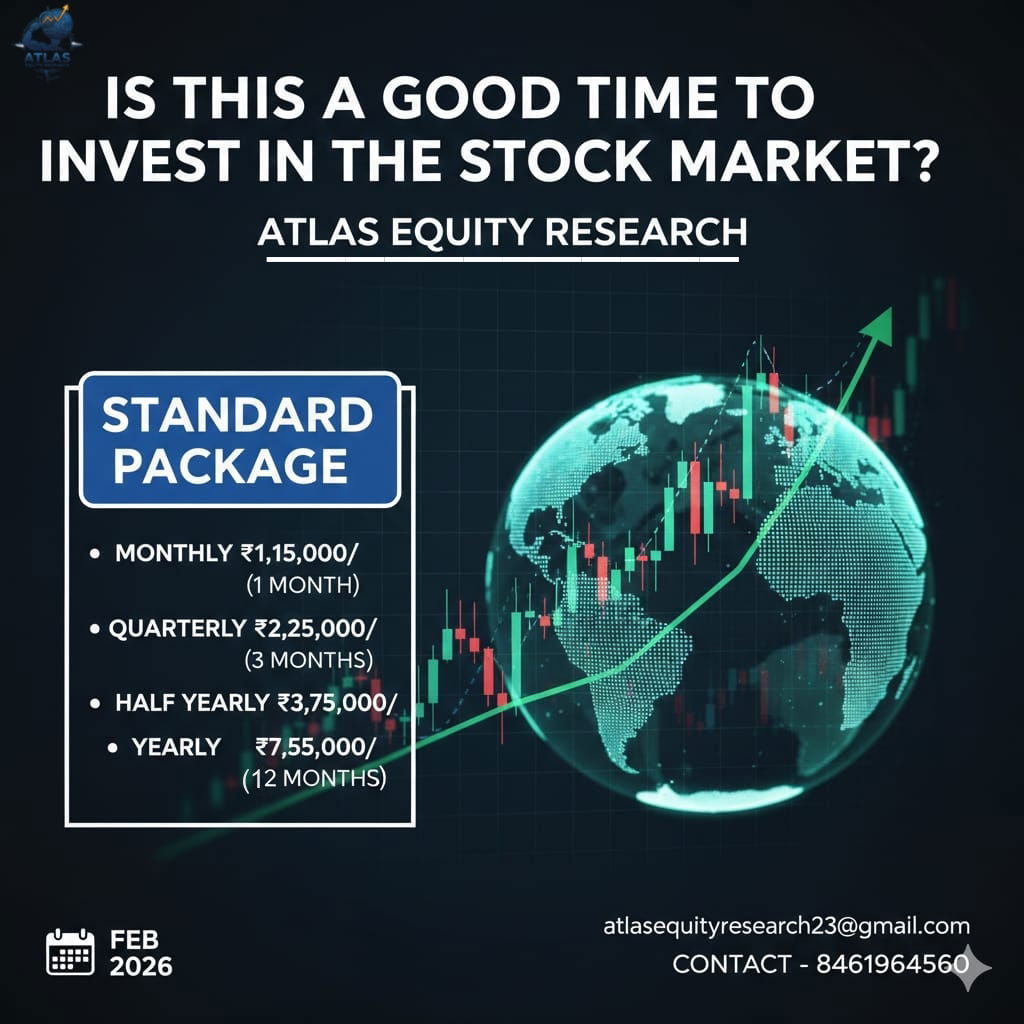
STANDARD PACKAGE
Beginner to advanced courses or webinars on stock market fundamentals, trading strategies, and technical analysis.

✖